
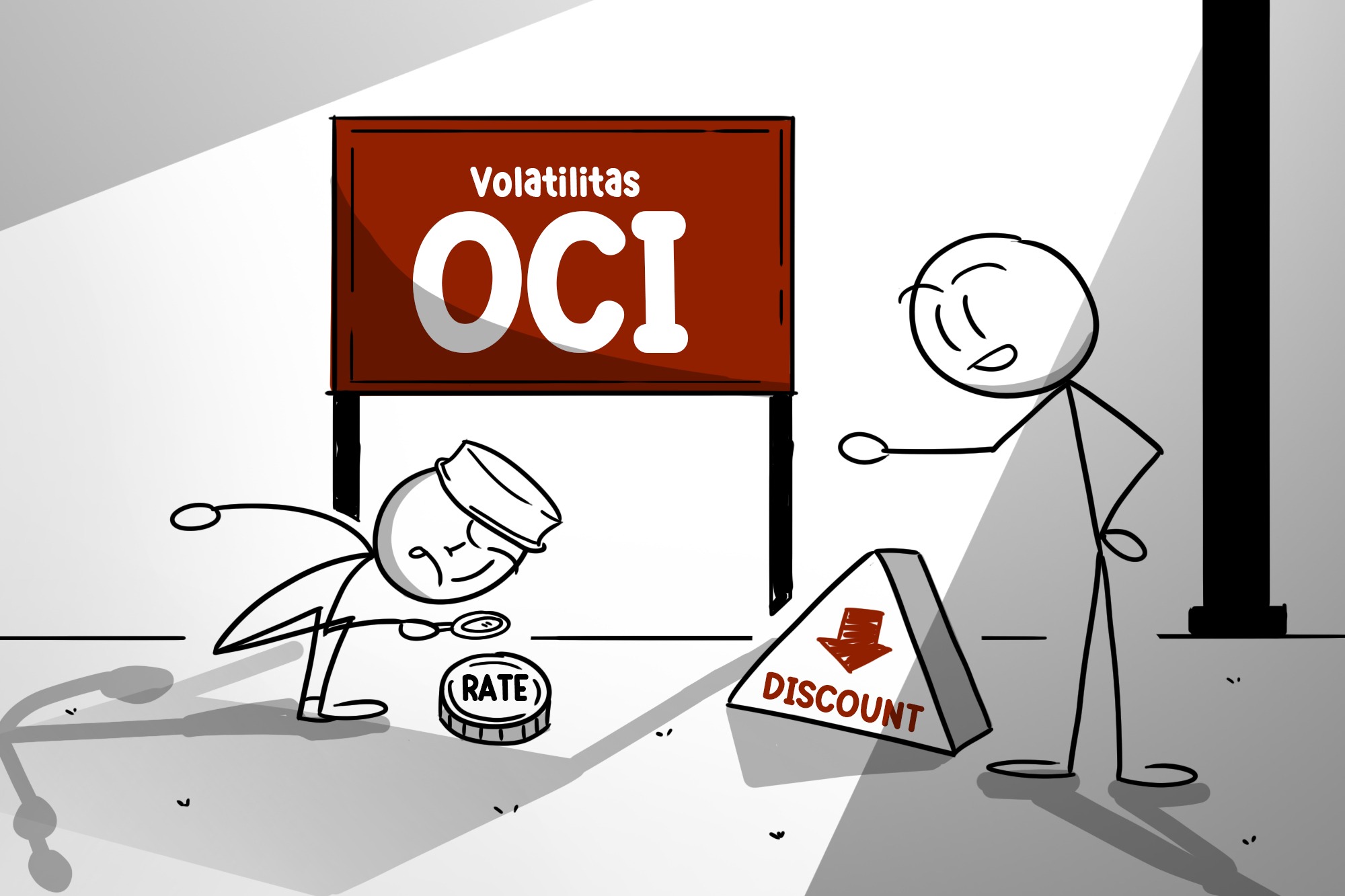

Tucked inside every set of financial statements that carries long-term employee benefit obligations is one line item that tends to draw a lot of attention without being well understood: OCI, or Other Comprehensive Income. The number can swing meaningfully from one reporting period to the next — enough to raise eyebrows from management, auditors, and shareholders alike.
So what is OCI actually capturing? How does it tie back to employee benefits? And how do you read the movement without panicking?
What OCI Really Is
OCI is the part of the financial statements that captures actuarial remeasurement — the gains and losses that don’t run through the profit and loss statement, but still flow through equity. In the context of long-term employee benefits — pensions, severance, long-service leave — OCI is where the impact of updated assumptions and real-world experience that didn’t match the original estimates ends up. In actuarial reporting, the OCI figure is essentially the sum of three moving parts:
- Changes in financial assumptions — typically the discount rate and the salary increase assumption.
- Changes in demographic assumptions — things like retirement age, mortality, or turnover patterns.
- Experience adjustments — the gap between what the actuary assumed and what actually played out: actual salary increases, real retirement ages, real turnover.
Why It Moves Up and Down
The OCI figure is volatile by nature, and the drivers map cleanly onto the three components above.
↑ What pushes it up
- Discount rate falls. When the discount rate goes down, the present value of the obligation goes up. The increase lands in OCI as a remeasurement loss.
- Actual salary growth runs above assumption. The plan was built on an 8% salary growth assumption, but salaries actually moved 10%. The under-estimate flows through this value.
- Methodology refinement. Switching from rounded ages (say, 35) to exact ages (35 years and 4 months) tightens the calculation and typically increases the obligation.
- Benefit enhancements. Adding long-service leave or upgrading the benefit formula raises the liability — the bump goes through OCI.
↓ What pulls it down
- Discount rate rises. A higher discount rate shrinks the present value of the obligation, generating a remeasurement gain.
- Demographic assumptions ease. For instance, raising the assumed turnover rate so that fewer employees are projected to reach retirement.
- Benefit downgrade. Moving from a heavier benefit framework to a lighter one — say, from the Manpower Law (UUK) baseline to PP No. 35/2021 — reduces the obligation.
- Real exits ahead of schedule. When more employees actually leave before retirement than the model predicted, the realized obligation comes in lower than projected.
Should OCI Worry You?
Even though OCI doesn’t hit profit or loss directly, it still matters — and here’s why:
- It signals the long-term financial health of the company.
- It moves equity on the balance sheet.
- Auditors and stakeholders watch it closely, because large swings invite questions.
Walking Through an OCI Calculation
Here’s a simplified example of how OCI shows up in an actuarial report.
Company Profile
- Name: PT Maju Terus
- Permanent headcount: 100
- Average salary: IDR 10,000,000
- Retirement age: 55
- Discount rate (2023): 7%
- Salary growth assumption (2023): 8%
In 2024:
- Discount rate drops to 6.5%
- Actual salary growth comes in at 10% (above assumption)
- A few employees move between divisions and are folded into the new benefit treatment
- Age input is refined from rounded to exact
Comparing the Liability

The OCI figure of IDR 1.2 billion here is not a cash outflow, and it doesn’t run through profit or loss — it’s recorded under Other Comprehensive Income.
What This Means for Management
When management sees the number, the first questions are usually:
“Is this a loss?”
“Do we have to pay this?”
The short answer: not directly.
Other Comprehensive Income isn’t a cash expense. It’s an actuarial remeasurement reflecting updated assumptions and refreshed data — closer to an “estimate true-up” in accounting terms than an actual outflow. That said, it’s not a number to dismiss either, because it directly affects total obligations and equity.
A rising Other Comprehensive Income signals that the long-term liability has grown because of assumption changes and real-world employee data. That has implications for long-term financial strategy, even when no cash is leaving the building.